Races, festivals and concerts: how not to get lost in the crowd
Forty thousand people, your battery at 20%, and WhatsApp won't send: in a crowd, finding each other is harder than it sounds. What to agree on beforehand, how to share your location, why the network jams, and what to do if someone (especially a child) gets lost.


A popular race with the family cheering at the finish line, a three-day festival, the year's big concert at a stadium, the village fiesta. They all have one thing in common: lots of people in a small space, and a phone that slows down just when you need it most. Here's what works for finding each other, based on data from the Spanish National Police and the mobile carriers.
Before you go: what to agree on at home
- A fixed, easy meeting point: not “at the entrance,” but “at the Red Cross tent” or “under the 40 km sign.” And a time: “if we don't find each other, we meet there at 11:00 PM.”
- A plan B without a phone: what each person does if their battery dies or there's no signal. If you agree on it in advance, nobody panics.
- Full battery and a power bank. In a crowd, your phone uses more power searching for signal.
- Kids, with a phone number on them: the Spanish National Police hand out bracelets at some festivals for young children, with their name and, above all, their parent's or guardian's phone number. If you don't get one, a marker on the arm or a card in the pocket does the same job.
- A photo of your child from that same day, showing what they're wearing. If they get lost, it's the first thing you'll be asked for.
During: sharing your location
The simplest option is for everyone to share their live location in the WhatsApp group before going in (it lasts 8 hours at most), or with Google Maps “until I turn it off.” Telegram also has an alert that notifies you when you're within a certain distance, which is handy for finding each other inside a venue (Telegram, step by step). For a trip or a multi-day festival, sharing location on a group trip covers all the options.
At races, many organizers offer live updates through the bib chip: family can see on the official website or app which checkpoint the runner has passed, plus an estimate of where they are in between. The Madrid Half Marathon was already doing this in 2018. Check whether your race offers it before you set off: it helps you know when to head to the finish line.
Why WhatsApp won't send (even with bars)
Mobile networks are sized for the people who live in an area, not for hundreds of thousands of people all at once. At San Fermín, for example, Xataka Móvil reported that Pamplona's population multiplies and that, even when you have signal, a message or photo may not go through. According to their experience, what helps is:
- Stepping a little away from the crowd and trying again.
- Calling instead of texting: data is the first thing to get congested.
- Trying another network (5G, if your phone and plan support it).
- Airplane mode for a while so you don't waste battery searching for signal.
And an important consequence: when the network is congested, no location app updates, ours included. You'll see the last known position with its time (“15 minutes ago”). That's why the agreed meeting point is worth more than any map. We explain this in why the locator says “10 minutes ago”.
If someone gets lost
- If it's a child: alert the security staff or the police right away. Don't wait and search the whole venue alone.
- If you find a lost child: the Spanish National Police ask that you stay where you are (the family usually returns to where they last saw the child), reassure them, and call 091 (in Spain).
- If it's an adult: go to the meeting point at the agreed time before wandering around.
- If it's an emergency: call 112 (in Spain), which receives your location automatically when you call (how it works).
How Mi Estela does it
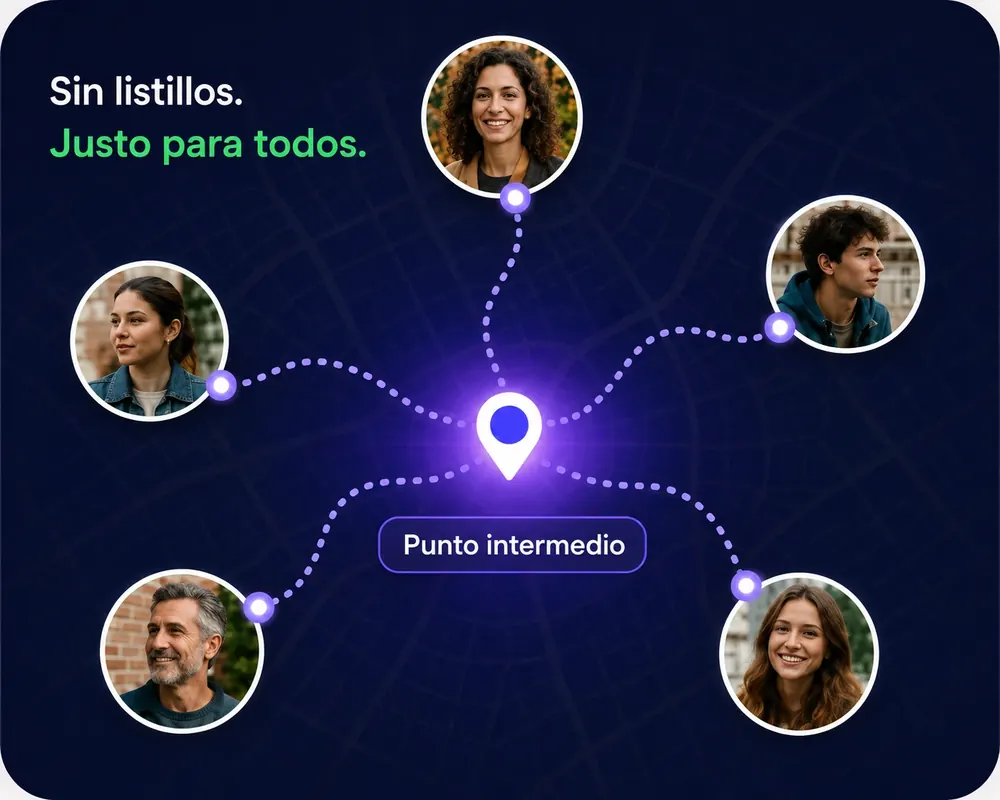
In Mi Estela you can create a circle just for the event, separate from your family one, and see everyone on the same map with their photo and battery level (the ring turns orange when it's low). Tap someone's photo and “Alert me when they get here” notifies you as soon as they reach where you are, while “When we get close” lets you both know when you're near each other. The midpoint suggests where to meet halfway when you set off. If you send an SOS with no signal at that moment, it's saved and goes out on its own as soon as you're back online. Anyone without the app can use the live link to see you in their browser for as long as it lasts. And we'll be honest: in a crowd with a congested network, we can't work miracles either, so the meeting point still comes first. More ideas in for friends and groups.
Sources
- Nuevecuatrouno: Spanish National Police hand out identification bracelets for children at San Mateo festivals (Sep 17, 2024; accessed Oct 15, 2026)
- Xataka Móvil: why WhatsApp messages don't send at San Fermín even with signal (Jul 9, 2024; accessed Oct 15, 2026)
- Think Big (Telefónica): the Madrid Half Marathon, a connected race (Apr 23, 2018; accessed Oct 15, 2026)
- Droid Life: Telegram news (Apr 29, 2024; accessed Oct 15, 2026)