Comparisons · How it works · Safety
Car, Motorbike or Bike GPS Locator: AirTag, Find Hub or SIM
An AirTag at €35 and a GPS with a subscription don't do the same job, even though both “locate.” Here's what each does with a vehicle, what it costs, its catches (battery, subscription, alerting the thief) and what to do the day it disappears.

If you search for a “GPS locator for my car,” you'll likely run into two very different things under the same name: Bluetooth tags like the AirTag, which are cheap and have no subscription, and GPS locators with their own connection, which cost more and are paid monthly or yearly. Here are the differences that matter with a vehicle, with prices in Spain checked on October 15, 2026.
1. Bluetooth tags: AirTag, Find Hub and SmartTag
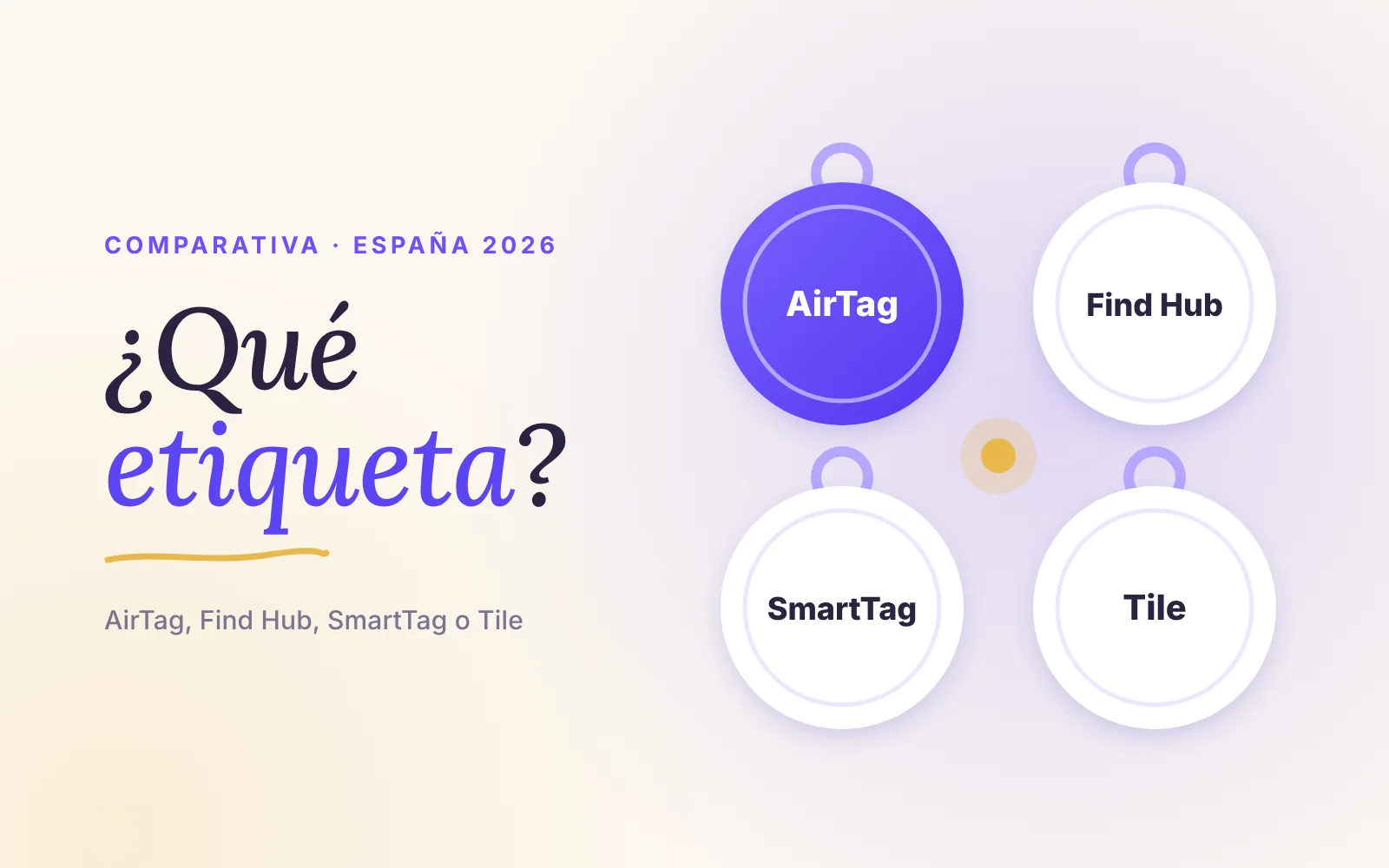
They have no GPS. The tag emits a Bluetooth signal, and any compatible phone that passes nearby reports, anonymously and encrypted, where it is. The AirTag uses Apple's iPhone network; Find Hub tags (such as the Moto Tag from Motorola) use Google's Android phone network; the Galaxy SmartTag2 uses Samsung's.
- The good part: they're cheap (from about €20-35 per unit), have no subscription, the battery lasts a year or more, and they fit hidden in a motorbike compartment or under a bike saddle.
- What they don't do: follow the vehicle in real time. The position updates when a phone passes nearby: in a closed garage or in the countryside, it can take a long time or never arrive. The author of a test on Xataka Móvil (updated February 2024) who hid an AirTag on his motorbike summed it up: it works well in the city, but it's not a GPS.
- The alert for the thief: iPhone and Android warn whoever carries an unknown tracker that moves with them. It's designed against stalking (we explain it in how to tell if an AirTag is following you), and it can also alert someone who has taken your motorbike.
2. GPS locators with their own connection
They have their own GPS and send the position over the mobile network (with a SIM) or over low-power networks for objects. That's why they don't depend on someone happening to pass by.
- The good part: a real position every few moments, alerts if the vehicle moves or leaves an area, and a history of routes.
- What to check: the subscription (the SIM or the plan), the battery (weeks to months if it's standalone; units wired to the vehicle's battery don't need charging, but they must be installed) and coverage in the countries you travel through.
- An example with a price: Motorpasión published the Invoxia GPS Classic on November 28, 2025, which needs no SIM, covers Spain and 14 other European countries, and lasts up to six months per charge. It costs €79 with no subscription, €88.41 with one year included and €103.70 with three years, on sale. Prices change, so check how much renewing the subscription costs before you buy.
Which one to choose, in a table
| Bluetooth tag | GPS with connection | |
|---|---|---|
| Price (Oct 2026) | About €20-39 per unit | From about €80 plus the subscription |
| Subscription | No | Yes (SIM or plan) |
| Real time | No: when a phone passes by | Yes, every few moments |
| In a garage or the countryside | Weak | Better (depends on coverage) |
| Battery | Battery lasting a year or more | Weeks or months, or wired |
| Alerts the person carrying it | Yes (anti-stalking protection) | Usually no |
By vehicle
- Bike: a well-hidden tag is the most practical option. For an expensive e-bike, a GPS with movement alarm.
- Motorbike: if you park on the street in the city, a tag helps; if you lose sleep over it, a GPS wired to the battery with an alert when it moves.
- Car: first check whether your car already comes with a connected app that shows its location. If not, a GPS with connection; a tag in the glovebox is a cheap backup plan.
- Choose the tag based on your phone: AirTag with iPhone; Find Hub with Android; SmartTag2 only with Samsung. We compare them in AirTag, Find Hub, Tile or SmartTag.
If it gets stolen
Don't go looking for it yourself. File a report (with the Policía Nacional, 091, or the Guardia Civil, 062, depending on where you are in Spain) and tell them the vehicle has a locator and where it shows. The location is useful to them; for you, going alone to a place where your stolen motorbike is can end up being very costly.
Only on your own things
A locator goes on your own vehicle. Putting one on someone else's car (a partner, an ex, an adult child) without them knowing isn't “for safety”: it can be a crime. We cover this in partner control through your phone.
And where Mi Estela fits in
Mi Estela doesn't locate objects: it's for people who choose to share where they are. If what really worries you isn't the motorbike but who's riding it, what helps is something else: your child sharing their location with you, an alert when they arrive, and “Follow…,” which appears over their face when they start the engine and shows the map with them along the road. We cover this in behind the wheel.
Sources
- Motorpasión: Invoxia GPS Classic GPS locator on sale (Nov 28, 2025; checked Oct 15, 2026)
- Xataka Móvil: AirTag as an anti-theft alarm on a motorbike (updated Feb 2, 2024; checked Oct 15, 2026)
- Hipertextual: the new AirTag and its price in Spain (Jan 26, 2026; checked Oct 15, 2026)
- Xataka Móvil: AirTag alternatives for Android and their prices (Jul 8, 2026; checked Oct 15, 2026)